Showing posts with label Mauritania. Show all posts

Saturday, August 20, 2016

Mauritanis anti-slavery campaign

Thirteen anti-slavery activists in Mauritania have been sentenced to up to 15 years in prison for their alleged role in a riot in June. A tribunal found the members of the Resurgence of the Abolitionist Movement (IRA) guilty on Thursday of counts including attacks against the government, armed assembly and membership of an unrecognised organisation. The activists were arrested in late June and early July after a protest against eviction by residents of a slum in the capital Nouakchott, many of whom are themselves former slaves. The Nouakchott slum was home to many so-called Haratin - a "slave caste" under a hereditary system of servitude whose members are forced to work without pay as cattle herders and domestic servants.

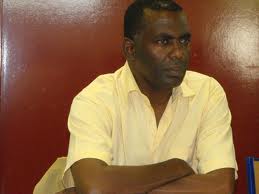
IRA Vice President Brahim Ramdane called the verdicts a "parody of justice" 

The defendants said they were not present at the June protests and that the trial was a politically motivated attempt by the government to discredit their organisation. The decision was condemned on Friday by international campaigners as a "devastating blow to the Mauritanian anti-slavery movement".

Sarah Mathewson, Africa Programme Manager at Anti-Slavery International, said that the activists were "clearly being targeted by the government for their work to expose and denounce slavery, still commonplace in the country".


Mauritania is a focus of activism by the modern anti-slavery movement over a practice believed to affect between 4 and 20 percent of the population.

Sunday, July 10, 2016

The Ugly Face of Canadian Capitalism

Canadian mining corporation Kinross Gold recently suspended work at its Tasiast mine in Mauritania  to protest against an instruction from its government to desist from employing ‘expatriates’ who  had no permission to work at the mine.

Union officials complained about the gap in pay between locals and foreigners. “There are 2,600 Mauritanian workers employed by the firm of whom 1,041 are permanent, costing the company $36 million, while there are 130 expatriate employees who cost $43 million,” workers’ spokesperson Bounenna Ould Sidi told AFP. Further irritating its Mauritanian staff, Kinross mostly houses ‘expatriate’ managers outside the country, in the Canary Islands. As with many other Canadian mining companies in Africa, Kinross has paid the country little and was accused of corruption.

On three occasions over the past five years the mineworkers have withdrawn their labour in a bid to force the world’s fifth biggest gold mining company to respect previous commitments to improve their pay and conditions. In 2011 the local workforce was angered by the company’s refusal to transfer seriously ill employees to the capital Nouakchott. When Kinross laid off 300 workers at the end of 2013 the union claimed it was done in violation of the country’s labour law and that one of those dismissed was still receiving medical treatment for a workplace injury. Demanding government action, the laid-off workers protested outside the presidential palace in Nouakchott 300 km away. After a multi-day sit-in the police raided their makeshift camp, arresting a dozen and injuring a similar number.

In 2010 two Tasiast employees were arrested after dumping toxic waste in an inhabited area near the mine. There was no independent environmental assessment of the multibillion-dollar mine and the Toronto-based company failed to certify Tasiast under the International Cyanide Management Code, a voluntary agreement that allows companies to demonstrate their commitment to properly manage the poisonous substance.

Allegations of bribery have been swirling around Kinross’ Mauritania operations for years. Late 2015 the US Department of launched an investigation into “improper payments made to government officials” at Kinross’ operations in Mauritania and Ghana. MiningWatch Canada and French anti-corruption association Sherpa submitted a long report detailing allegations of bribery and corruption to the RCMP and called for the police force to investigate Kinross’ apparent breaches of Canadian anti-corruption laws at its Mauritanian and Ghanian mines. Adding to the Mining Watch/Sherpa report, France’s Le Monde quoted a former member of the company’s African legal department saying, “the level of corruption was becoming grotesque.”

In March of this year the Globe and Mail revealed that Kinross gave a US $50 million contract to a French/Mauritanian partnership even though their bid wasn’t the lowest. The Mauritanian company was owned by a former top government official and an internal Kinross document noted the company “took into consideration the stated preference of officials of the Government of Mauritania that the logistics contract be awarded to” the French/Mauritanian consortium.

When President Mohamed Ould Abdel Aziz criticized the company’s meagre payments to the treasury in 2013, Kinross reportedly hired a couple of his cousins to important positions. A 2013 Africa Mining Intelligence article detailed the close familial and political ties between Kinross and Aziz, who came to power by overthrowing the country’s first elected president in 2008.

Canadian ruthless multinational bullies workers, ignores environmental standards and ‘buys’ politicians.


Friday, January 16, 2015

The struggle against slavery continues

Police in Mauritania used tear gas to disperse protesters, after three anti-slavery activists were sentenced to two years in prison on Thursday. Biram Ould Dah Ould Abeid, the runner-up in 2014 presidential elections and the head of an anti-slavery group, was convicted along with one of his aides Bilal Ramdane, and Djiby Sow, a civic and cultural rights campaigner. The activists were charged with "belonging to an illegal organisation, leading an unauthorised rally, and violence against the police".

According to Amnesty International, the activists were arrested while trying to educate people about land rights in the west African country where slave descendents are often forced to give up a portion of their crops to the traditional masters. Gaetan Mootoo, Amnesty's West Africa researcher, denounced the convictions, saying: "The intensifying crackdown on anti-slavery activists in Mauritania has no legal justification and is symptomatic of the government's lack of respect for human rights."


The country was the last in the world to abolish slavery, in 1981, and since 2007 its practice has been officially designated a crime punishable by up to 10 years in prison. But campaigners say the government has failed in the past to acknowledge the extent of the trade. Forced labour is a particularly sensitive issue in Mauritania, where anti-slavery charities are very active.
http://www.aljazeera.com/news/africa/2015/01/mauritania-jails-anti-slavery-activists-201511521540169595.html

Thursday, January 08, 2015

Mauritania and the Abolition of Slavery Movement


Activists persecuted for opposing land-grab-driven slavery in Mauritania

Many Mauritanian citizens cannot wait for the year 2014 year to end. Unfortunately, 2015 does not look promising either.
First, blogger Mohamed Cheikh Ould Mohamed faces a death penalty sentence imposed on December 26 for blasphemy, though he denies insulting the prophet, saying his blog commentary was a reflection on an unjust social order based on a caste system that marginalizes underprivileged communities.
This caste system is also what has driven many activists in Mauritania to protest the ongoing land grabs by corporations against local farmers who are then forced to work the land they previously owned. One such activist is Biram Dah Abeid, head of the Initiative pour la Résurgence du Mouvement Abolitionniste en Mauritanie IRA (the Initiative for the Resurgence of the Abolition Movement in Mauritania). He and other Mauritanian human rights activists were arrested on November 11, 2014.


In 2013, Dah Abeid received the
United Nations Human Rights Award and the Front Line Defenders At Risk. He organized a nationwide rally to raise awareness about land-grab slavery—a practice that has proven especially harmful for the Haratin people, a community made of mostly farmers. Some of the rally's participants were arrested in November.
Front Line Defenders, an international human rights organization, posted the following notice on their website :
On 11 November 2014, Biram Dah Abeid and eight of his colleagues from IRA were charged and held in pre-trial detention in the prison in Rosso, because they took part in an illegal caravan of protest calling for the final abolition of slavery in Mauritania. Biram and his colleagues were held in isolation, beaten and had their mobile phones taken. Then, on 17 December, Biram and his colleagues were informed that their trial would be held the following day, even though his lawyers had not been given advance notice so they could prepare his defence. In Mauritania the practice of slavery persists in a more traditional way [..] continuing to live as chattel slaves to their masters. In practice, this means they can be bought and sold, hired out, or given away as gifts 
 In a press release on November 12, Amnesty International demanded that the activists be set free: 
These arrests are part of a growing crackdown on anti-slavery activists in Mauritania. In October, four IRA members were arrested in the largest mosque of the capital city Nouakchott, when they were simply responding to criticisms of their organization. They were accused of disrupting prayers and inciting unrest, among other charges. They are also currently held in detention without trial.
From his jail cell, Dah Abeid called on all human rights activists in Mauritania to get involved in the civil rights movement in a peaceful manner. He also added a message to the authorities: 
I am sending this message to the authorities: [...] We are driven by the spirit of sacrifice that gives us the moral drive to resist any sentencing because we dedicate our lives to the oppressed, to the humble, to democracy. 
They day following the arrest, Mauritanian diaspora in Europe and North America published a statement condemning the arrests: 
The success of the anti-slavery rally and the mobilization of the local population threatened the government. They decided to repress these activists in the final lap of their rally. In fact, when they reached the town of Rosso, the activists were apprehended by police forces right away. No one was allowed to reach out to a lawyer or relatives.  
Anti-slavery organizations have tried on several occasions to alert international media to a potential civil war in Mauritania because of what they call “a systemic pro-slavery position of the state that always sides with the slave-owners.” They have urged the international community to support the eradication of land-grab-driven slavery, to preserve the social cohesion of the nation.


Sunday, July 20, 2014

Slavery In Mauritania

Mauritania has the highest proportion of people in slavery in the world. According to one NGO in Mauritania, up to 20 percent of the Mauritanian population is enslaved.5 While not identical to the Global Slavery Index estimated of prevalence, these two figures, in the absence of more precise measurement, point to a growing consensus of high levels of enslavement in Mauritania.

Slavery in Mauritania primarily takes the form of chattel slavery, meaning that adults and children in slavery are the full property of their masters who exercise total ownership over them and their descendants. Slave status has been passed down through the generations from people originally captured during historical raids by the slave-owning groups.6

People in slavery may be bought and sold, rented out and given away as gifts. Slavery is prevalent in both rural and urban areas. It is reported that women are disproportionately affected by slavery; for example, they usually work within the domestic sphere, and a high level of control is exercised over their movements and social interactions. They are subject to sexual assault by their masters. Women’s roles include childcare and domestic chores, but they may also herd animals and farm, as men in slavery do.7

Beyond the context of private homes, it is reported that some boys, who have been sent to attend Koranic schools to become talibes (students), have been forced into begging. Although the scale of this problem is not known, it is thought to be quite significant; affecting local boys as well as boys trafficked into Mauritania from the surrounding regions.8

It is also reported that women have been subjected to forced marriage and sexual exploitation, both within Mauritania but also in the Middle East.9 Slaves are not permitted to have any possessions, as they are considered to be possessions themselves. As such they are denied inheritance rights and ownership of land and other resources. When an enslaved person marries, the dowry is taken by the ‘master’ and if they die their property can be claimed by the ‘master’.10

read more here


Thursday, November 21, 2013

Mauritania: Majority Of Locals Worse Off Than Refugees

Since April, when the UN Refugee Agency (UNHCR) started biometric registration of the Malian refugees in Mauritania's Mbera camp, 8,000 of the 68,000 registered refugees have been de-activated from the system - almost all of them Mauritanians from nearby towns and villages hoping to access aid handouts. In September, a small group of camp residents tried to destroy the registration centre in protest of the new system, raising a key question: when and how should aid agencies helping refugees also try to assist vulnerable host populations?

The situation in Mauritania is by no means unique; many refugee camp populations are swollen with locals trying to access aid. Locals have even outstripped refugee populations in some crises, said a UNHCR source.

UNHCR and other aid agencies often assist host populations to allay potential tensions between refugees and locals, but doing so is typically not a first priority. Some agencies do it from the get-go, while UNHCR usually does so after the emergency phase of protracted refugee situations.

Loubna Benhayoune, head of the UN Office for the Coordination of Humanitarian Affairs (OCHA) in Mauritania, urges early aid, telling IRIN: "The locals are just as vulnerable [as the refugees], if not worse." OCHA is currently mapping out who is doing what, and where, for local populations.

UNHCR said its initial priority is to respond to the immediate refugee crisis. Just getting the basics - food, water, shelter and healthcare - in place for tens of thousands of refugees, in a situation where the agency had no staff, and no office within 1,000km "was quite a challenge," said Hovig Etyemezian, who runs the camp at Mbera for UNHCR. "Now we're focusing more on quality issues, including how to better assist host populations."

Locals impoverished

Mbera camp is situated in Hodh el Chargui, Mauritania's most food-insecure region, where 37 percent of inhabitants are at risk of hunger, according to the World Food Programme (WFP). The region received very little rain in 2011, and this year fared little better. In October, when pasture should appear in even the Sahel's northern desert zone, there was little in Hodh el Chargui.

A Joint Assessment Mission by WFP and UNHCR earlier this year revealed while 80 percent of refugee households were eating three meals a day, just 14 percent of nearby families were doing the same.

Mauritanians near the camp whom IRIN spoke to were gracious about the refugee presence. Bassikounou resident Fatouma Mint Lhessen told IRIN, "These people are our people. They are like our brothers and sisters, and we are here to help them."

But her family is struggling, too. She lives in a one-room house with her three children as her husband searches for work in the bush. Had she lived nearer the camp, she would have tried to access food aid, she said. "Prices are too high. I cannot afford to make sauce many days. In some ways, we are more refugees than the refugees!"

She continued: "We live. We survive. Sometimes we eat well, sometimes we eat nothing - rice, no sauce. I'm used to living on the edge. It's my routine."

Read the full article here 

Developed world, developing world: the haves and have nots, the rich and the poor, the well fed and the hungry, the wealthy and the destitute. It matters not where in the world you find yourself, this is the situation. The capitalist system exacerbates any difficult situation and increases tensions between groups which are fundamentally all in the same boat. Free access to the common wealth? Not when money is part of the equation.
JS


Monday, August 19, 2013

Poverty amid Plenty

Mauritania is one of the richest countries in the region in terms of fish reserves and mineral wealth as well as in terms of livestock and agricultural lands. However, these economic resources are not reflected in the miserable lives of its people. a government  minister spent over $1 million on a dinner party held for a ministerial delegation of less than six ministers.

Mauritania’s coastline along the Atlantic Ocean stretches more than 700 kilometers and encompasses one of the most important Arab reserves of fish wealth. According to governmental sources, these could supply one-quarter of fish needs in the Arab world.

Mauritania is the third largest producer of iron in the world, thanks to the mines in the north of the country near Kediet ej Jill, in Zouerat. The freight train [associated with these mines] is the longest in the world and exceeds 3 kilometers in length. It transports iron ore to the mining port in the city of Nouadhibou.

75,000 barrels of oil are extracted per day from wells near Nouakchott, and Mauritania is also seeking to extract gas from six wells near Nouakchott. Meanwhile, eight wells are still waiting for the start of oil exploitation in partnership with the French company Total.

Mauritania exports gold from its gold mines near the city of al-Shami, about 250 km north of the capital. According to an official statement, the national gold company is seeking to build a plant next year capable of processing 30,000 tons of minerals per day. This will enable Mauritania to have an annual production of 830,000 ounces of gold during the next five years.

Mauritania exports copper from the Guelb Moghrein Mine, located near Akjoujt to the north of Nouakchott.

The country is witnessing an unprecedented turnout of mineral exploration companies and the Mauritanian Ministry of Mines stated that it had granted 283 licenses for mineral exploration at the end of last year. Moreover, there are preparations for the extraction of uranium and other minerals.

In the capital Nouakchott, for example, whose population does not exceed one million people — one-quarter of the total population, according to the last census — around 50% of residents live below the poverty line.  The luckiest Mauritanians work on Spanish tomato farms in return for low wages, while tens of thousands of them have relocated to the Arab Gulf states.

Source


Sunday, July 21, 2013

Slaves by any other name

"Slavery is alive and well in Mauritania" - Messaoud ould Boulkheir, President of Mauritania's Parliament, May 2013.

Are there still slaves in Mauritania? Legally, no. Are large numbers of ex-slaves and their descendants still trapped in exploitative systems? Yes.

Mauritania, like its Sahelian neighbours Senegal and Mali, has a long history of slavery. In the Sahara 'household slavery' was seen as an integral cultural element. In this Muslim society, slave marriage and reproduction was widely encouraged; slave children belonged to masters and ensured future generations of slaves. Additionally, there was a formally recognised category of 'freed slaves': haratin.

In Mauritania, all former slaves and their descendants are haratin. When manumission (freeing a slave) followed Islamic law, the resulting relationship (wala) created an ongoing interdependence: former masters owed material, moral and legal assistance, while haratin shared in familial social obligations and religious payments.

Real change came in the wake of the Sahelian drought (1968-74) that drove thousands from the desert into urban centres like Nouadhibou, the Atlantic port, and Nouakchott, the new capital. Most were haratin or slaves whose masters could no longer support them. In the late 1970s, the political group El Hor ('The Freeman') argued for improved conditions for these groups. Its success in publicising their plight internationally forced the government to formally abolish slavery in 1980.

But religiously-sanctioned relationships such as slavery and wala were not jettisoned so easily, especially as few amongst slaves, haratin and masters found sufficient material compensation in the new reforms to risk leaving/rejecting the traditional security of slavery. The institution thus continued.

Today, haratin are the poorest cultivators, fishermen, and herders; they are the urban street people, domestics, semi-employed manual labourers, and poorly-salaried workers (for example, the recently-striking Nouadhibou dock-workers). However, while still a minority, haratin also account for some prominent middle-class professionals (teachers, nurses, journalists, lawyers, architects, professors) and wealthy businessmen.

What constitutes slavery and what determines who is 'slave' in post-abolitionist Mauritania are not straightforward. What the government says about eradicating the 'vestiges of slavery' and what its agents (legal, police and military) do, seldom overlap. It is local experience - rural and urban, private and public - not statutes and laws that defines 'Mauritanian slavery' today.

http://allafrica.com/stories/201307181120.html?viewall=1

Tuesday, October 09, 2012

Sour capitalism

Mauritania is flooded with cheap milk products imported from Europe. Sixty percent of the population depends on the livestock sector in some form for income, and the sector contributes almost eight percent to the country's GDP, yet the country imports 65 percent of its milk requirements.  European milk products continue to stifle domestic dairies. Between 30 and 40 percent of locally produced milk in West Africa is wasted or lost because pastoralists do not have the knowledge or the capacity to process their surplus, pointed out Anthony Bennett, a dairy expert at FAO.

Poor producers in Mauritania are unable compete with the heavily subsidized milk sector in developed countries in Europe and elsewhere, the UN Food and Agriculture Organization (FAO) noted it is report Why has Africa Become a Net Food Importer? Between 1986 and 2007, industrialized countries provided at least $20 billion worth of support to their milk sectors, the report noted.

Across West Africa, customs duties are low, and "local farmers are squeezed out of the dairy value chain by subsidized European milk powder," said Concord, the European NGO Confederation for Relief and Development, in its 2011 report. "Regional production is therefore unable to meet domestic market demands. In Burkina Faso, nearly one out of every two litres of milk consumed in the country was imported in 2006, and in urban areas the figure was as high as 9/10 litres. European subsidized milk powder accounted for half of the cheap imports. Today, unfair market conditions continue to undermine local milk production," the report noted. The European Commission, in an effort to mitigate the impact of its subsidies, in 1984 introduced a quota on the amount of milk that it could produce, which would inhibit dumping surpluses in developing countries’ markets. The Commission also banned export subsidies for dairy farmers in 2008. However, in 2009, when production slumped and milk prices hit a record high, it reintroduced export subsidies for dairy farmers, and its quota arrangement is expected to be eliminated in 2015. "Combined with the EU’s current practice and further market-orientation of the sector, the external impacts of the EU’s milk policy may even worsen," said the Concord report.

From here

Sunday, July 22, 2012

Sharing to survive

60 percent of the population of Mauritania live on less than one US dollar a day. "No one can eat alone - many people do not have enough," said Moussa. "All neighbours cook and eat together. Everyone eats in batches - first the children, followed by the elders, and then the more able-bodied...We will all help each other,” said Moussa, “with support from our relatives in towns and other countries."

In November 2011, the Mauritanian government launched the Plan EMEL (Hope), a strategy to provide subsidized cereal and livestock through government shops. "The plan only targets people who have been identified as extremely vulnerable - child- and women-headed households - and if you want to buy from the shop you still need money. I did not have any," said Penda Boubou, 82, a grandmother. Boubou said she would have died if the NGO, Oxfam, had not stepped in with cash transfers. Boubou receives about $50, with which she supports the 15 members in her household.

Source

Friday, June 08, 2012

Mauritanian Arab Spring

Many people have never heard of Mauritania, and most would probably be unable to pinpoint it on a map even though its land mass is larger than France and Germany combined. Many Arabs are unaware that it is a member of the Arab League. Since January 2011, when Yacoub Ould Dahoud fatally set himself alight in front of the presidential palace, the country has been ungoing an Arab Spring. Protests have taken place across Mauritania ever since, spurred by the same factors as in other Arab states: economic, political and social disenfranchisement. But unlike those in Tunisia, Egypt, Libya, Bahrain, Yemen, Syria and elsewhere in the region, Mauritania's have been barely a blip on the news radar. Very low internet usage in the country – reportedly less than 2% of households – has made it difficult for Mauritanians to get their views, eyewitness accounts and images out to the rest of the world. It is the overlooked uprising.

 Few have taken little interest in Mauritania since its independence from France in 1960, because until recently it was seen as a poor expanse of desert with little strategic value (it has one of the lowest GDPs in Africa, making it among the poorest countries in the world). However, its importance is likely to increase, and with it the world's attention. Mauritania's extensive iron ore deposits, which account for almost half of its exports, have increased in value due to rising metal prices, leading to more mines being opened, and increased revenues. Furthermore, oil was discovered in 2001, although Mauritanians have yet to benefit because the country lacks the necessary infrastructure to fully exploit its reserves. However, with production on the rise, several oil exploration deals inked in the last year, the potential windfall is huge.

 There is also the possibility, or perhaps even the probability, that the protests in Mauritania will intensify, mainly because the government seems not to have learned from the mistakes of other Arab regimes that are under threat. It has used a combination of repression and pledges of reform that have left Mauritanians unconvinced and more frustrated. Demonstrations have thus far been peaceful and centred around reforms. However, as in other Arab states, if protesters feel they are being indefinitely ignored or oppressed, not only might calls for reform become demands for regime change, but violence may become a means to advance those demands – a particularly dangerous development given Mauritania's ethnic fault lines.

 Mauritanians are no less deserving of their rights, rather than the self-serving interests of  the world powers.


Taken from here

Wednesday, March 28, 2012

Slavery Carries On

In 1981, Mauritania became the last country in the world to abolish slavery. It didn't make slavery a crime until 2007. Only one slave owner has been successfully prosecuted. Mauritania's government has done little to combat slavery and in interviews with CNN denied that the practice exists. "All people are free in Mauritania and this phenomenon (of slavery) no longer exists," one official said. Yet an estimated 10% to 20% of the population still lives in slavery - in “real slavery”. Slave masters in Mauritania exercise full ownership over their slaves. They can send them away at will, and it’s common for a master to give away a young slave as a wedding present. Local Islamic imams, historically have spoken in favor of slavery. Activists say the practice continues in some mosques, particularly in rural areas. "They make people believe that going to paradise depends on their submission,"

Slavery in Mauritania is not entirely based on race, but lighter-skinned people historically have owned people with darker skin, and racism in the country is rampant. Mauritanians live by a rigid caste system, with the slave class at the bottom.

White Moors are lighter-skinned Berber people who speak Arabic and have traditionally owned slaves. Most men wear light blue shirts called boubous, which have ornate designs on the chest. White Moors are the power class in Mauritania and control more wealth than any other group. Some, however, live in poverty. It's not uncommon to find a White Moor living in a tent only slightly larger than that of his or her slaves. Black Moors are darker-skinned people who historically have been enslaved by the White Moors. Originally from sub-Saharan Africa, the Black Moors have taken on many aspects of the Arab culture of their masters. They speak Hassaniya, an Arabic dialect. Slaves of noble families attain a certain level of status by association.

The Haratine - word literally means "freed slaves," but it can be used to describe people who are in slavery or who belong to the former slave class of Black Moors. Many Haratine people exist somewhere on the spectrum between slavery and freedom and are the target of class- and race-based discrimination.

Mauritania‘s other darker-skinned people come from several ethnic groups, including the Pulaar, Soninke and Wolof. These groups also are found in Senegal, which shares Mauritania‘s southern border. They look similar to Black Moors, but never were enslaved and are quite different in terms of culture and language.

Most slave families in Mauritania consist of dark-skinned people whose ancestors were captured by lighter-skinned Arab Berbers centuries ago. Slaves typically are not bought and sold — only given as gifts, and bound for life. Their offspring automatically become slaves, too.

Forty-four percent of Mauritanians live on less than $2 per day. Slave owners and their slaves are often extremely poor, uneducated and illiterate. This makes seeking a life outside slavery extremely difficult or impossible. On the other hand, poverty has also led to some slave masters setting their slaves free, because they can no longer afford to keep them.

“On this land, everybody is exploited,” said one slave

“We don’t pay them,” a slave-owner said “They are part of the land.”

Food shortages are dire and are a reason some Mauritanian slaves actually prefer to stay in the homes of their masters: If they leave, it’s difficult to survive.

“Chains are for the slave who has just become a slave..." Boubacar, an ex-slave said. “But the multigeneration slave, the slave descending from many generations, he is a slave even in his own head. And he is totally submissive. He is ready to sacrifice himself, even, for his master. And, unfortunately, it’s this type of slavery that we have today” — the slavery that American plantation owners dreamed of.

For a slaves to be free, they first must break the shackles in their minds. That applies not just for chattel slaves but also to wage-slaves


http://edition.cnn.com/interactive/2012/03/world/mauritania.slaverys.last.stronghold/index.html?hpt=hp_c1

Thursday, February 23, 2012

same old story - yet another famine

No sooner had the U.N. announced Somalia's famine was over and another hunger crisis looms.

Last year, around 13 million people in the Horn of Africa needed food aid. Now aid agencies warn failed harvests in the Sahel mean 12 million more people require assistance.

The Sahel, the band of desert and scrub that runs south of the Sahara, stretches, west to east, from Senegal to Mauritania, Mali Burkina Faso, Niger, Nigeria, Chad, Cameroon, the Central African Republic, Sudan, Ethiopia, Kenya and Somalia. Mauritania, a country that is three times the size of Arizona but has the smallest volume of potable water of any nation in the world, is one of the worst affected. A third of its population is already at risk of hunger.

The primary cause is a drought last year described as the worst for decades by the U.N. As a result, food prices have doubled or tripled, while the price of livestock — often the main store of wealth in the Sahel — plunged as pastures turned to desert and the animals began dying of thirst. Nor are such instances of failed rains isolated. A 2011 study by the Center for Forestry at the University of California, Berkeley, found rainfall in the Sahel has almost halved since 1954. In a region already poor and sparsely governed, the drought has intensified competition for food and water, and violent unrest — like recent intertribal battles over cattle in South Sudan — is rising. Northern Mali is currently the scene of a Tuareg rebellion, as is northern Nigeria, where an Islamist militant group, Boko Haram, is waging a campaign of bombings and assassinations against the state.

In a grain storage near Gaet Teidouma, stock manager Jeddou Ould Abdallahi looks helplessly at the few remaining sacks of cereal stacked against the whitewashed walls. There is no way they will feed hundreds of people in surrounding villages until the next harvest in September. "We are on the brink of a famine," he says.

"Within months, people will begin to starve unless we act," warns the European Union's humanitarian-aid commissioner, Kristalina Georgieva.

Johannes Schoors, country director of aid organization CARE in Niger, laments: "Certain donors still want to see dying children before they make available funds. We need to tackle the underlying causes of food insecurity; otherwise, we will face a crisis every year. But who can afford to finance that?"

Scoors is correct. Capitalism cares only for those with economic importance. Only socialism cater for peoples needs

Droughts don't inevitably mean famine. While they may set the conditions for starvation, only human beings ensure it. The world has more than enough food to feed itself.

http://www.time.com/time/world/article/0,8599,2106546,00.html?xid=newsletter-europe-weekly

Sunday, January 09, 2011

Slavery and Wage Slavery

In August 2007 Mauritania’s National Assembly unanimously adopted a law criminalizing slavery (including debt bondage and forced marriage). The law says slaveholders could be given 10-year prison sentences and fines ranging from US$2,000 to $4,000. Anyone facilitating slavery can be imprisoned for two years. The law also provides for financial compensation to former victims. Nearly a fifth of Mauritania’s 3.1 million people were slaves as of 2009. No one has been prosecuted for keeping slaves. Authorities generally classify such cases simply as disputes between an employer and his or her employees. The deputy head of SOS Esclaves in Mauritania, Mohamed Ould Khalifa explained “The authorities themselves keep slaves,”

“My masters told me: ‘The slave depends on his owner and in order to go to paradise he must obey his owner. Otherwise he will go to hell’,” said Rabah who, with the help of the Mauritanian anti-slavery group Initiative pour la résurgence du mouvement abolitioniste, was liberated. “I knew no one but my masters. I belonged to them and that seemed normal to me. When I was young my owners beat me; when I got older they threatened to take me to the police if I disobeyed them.”

Many say the question of land is at the heart of Mauritania’s slavery problem. “The cultivatable lands are monopolised by the former masters. And yet it’s us who farm them,” said Yeslim Ould Warmit, a Haratine farmer in the village of Leuceïba. “Indeed for them: slaves we were born, slaves we will always be,” added Abdallahi Ould Mohamed Salem, another freed sleeve. “That will not change as long as the local administration backs the former masters.”
“This land question is crucial,” said Mamadou Sarr, executive secretary of the forum of national human rights’ organisations in Mauritania. “Because today, no one is playing the game. Not the mayors, not the prefects, not even the governors. They still obey the big landowners.”

Banning slavery have failed to improve living conditions for victims of slavery.

“I was born into a family of slaves in 1959. I was sold to a tribe in northern Mauritania where I worked as a full-time slave. I was the first one to wake up and the last to sleep. My main daily work was to look after my masters’ cattle." Mbareck Ould Mahmoude told IRIN "My masters told me that I was free in 1979. They starting paying me US$19 monthly and $11 each to my mother and sisters to work as domestic workers. My mother and sisters are still working now for the same people as during the times of open slavery. They are now paid $27 a month, but that is not enough to live on. Now, people do not call me a slave anymore because of the law. But in reality, I am still a slave and I will stay one as long as I am poor and uneducated like the rest of my family. I feel that I am not a normal human being. I have no voice, no importance in my community and this is likely to last unless I get better pay and basic education. New slavery is worse than that of the old days. Today, you get a negligible amount for heavy work. You have to support yourself and your family unlike the old days of slavery, when you were called a slave but at least your food and housing were paid for by your masters.”

Thursday, November 08, 2007

Market Madness

Food monitors are concerned that people in West African countries who rely on international imports of wheat and rice are going to struggle to buy enough to eat this year due to high commodity prices.

Poor global production of wheat means worldwide prices reached a record high in September 2007 and remained volatile in October. Rice prices have also risen steadily since January 2007 according to the FAO, and high fuel prices have added higher shipping costs .

“We’re concerned,” said Henri Josserand, head of the FAO’s early warning unit in Rome. “We see that prices are going to be quite high and that’s going to mean that there are big problems of access to food for people in some West African countries this year.”

Mauritania and Senegal are the two countries in the region which rely the most on international markets rather than domestic farming. Wheat is a staple food in both but all of it is imported. Mauritania grows just 30 percent of the food its 3 million people need and imported wheat prices have exploded by over 75 percent there this year, from US$200 for a ton to US$356, according to the food monitoring group FEWSNET. Wheat is used to feed humans and animals in Mauritania.
“The main reason people moved to eating wheat was because it was less expensive. It became very important in basic diets,” said Salif Sow, Sahel representative of FEWSNET.
In Senegal, the government has cut import tariffs on wheat yet there has still been a 12 percent increase in the cost of bread in the last month.
In Guinea Bissau, where imported rice is a staple, there is also a concern. The World Food Programme has warned that prices for rice have increased by 40 percent in 2007 compared to 2006.

“Good harvests in one country in West Africa does not necessarily mean food security for the people that live there as West Africa’s highly integrated markets mean food moves freely from one country to another.”

A large part of the grain grown in Niger will pass over the border to Nigeria , and Niger could be left with a shortage as happened in the major crisis in 2005. In that instance, much of the grain grown in Niger was found to have been used to feed chickens in some of Nigeria’s vast chicken farms, even as people starved in Niger.

Once again , experts confirm that the capitalist market of buying and selling does not satisfy the basic human needs of society .

Monday, August 20, 2007

Slavery and wage-slavery

In Mauritania, slavery was banned years ago in 1981 - but it persisted and now there has been passed a new law meaning anyone that keeps slaves can be thrown into jail for up to 10 years.The law foresees fines as well as jail terms for slave masters and reparations for the victims. Mauritania's change in mindset seems to have found its momentum after an army coup in 2005. The military junta leader, Ely Ould Mohamed Vall, declared slavery a problem last year, a marked shift from the denials of the man he ousted.

"It's a historic moment. One of the reasons slavery has flourished is because of impunity, but now it's been criminalised in clear and comprehensive terms," Boubacar Ould Messaoud, the head of SOS Slavery in Mauritania, said

Mauritania's history of slavery goes back more than 800 years when Arab raiders surged across the Sahara to subjugate black Africans. Mauritanian slaves are born into an established slave class, and this binds them to their master's household. They can be given as gifts, and bought or sold. They must marry who their masters say and are usually told they can only go to heaven on their master's word.

As one small boy put it when talking to the campaign group Anti-Slavery International: "I grew up in the master's family, there was one son, we were almost the same age... He went to Koranic school and I was a shepherd, herding animals. I also had to fetch water. I did the work of domestics 24 hours a day. As a slave, we are the first to wake up, we are the last to go to bed."

Little will change though for that boy . From chattel slavery to wage-slavery is not really such a big change, though . He will labour in the interests of others and toil for the benefit of the master class .

"Slaves are often thought of as people in chains. But here they are born into submission. They are chained in their heads..." Messaoud of SOS Slavery went on to say .
Indeed , that is a condition that many live under - perhaps not literally actual slaves but still , nevertheless , in bondage to the yoke of capitalism and the necessity of working for a wage or a salary for mere simple survival and yet not realising their enslaved position in class divided capitalist society.
.

Monday, July 09, 2007

Mauritanian slavery

A new bill in Mauritania making slavery punishable by up to 10 years in prison is inadequate, says Anti-Slavery International , a lobbying group. The proposed law was too weak.

Slavery has existed for centuries in Mauritania. A presidential decree abolished it in 1981, but no criminal laws were passed to enforce the ban.

"Unfortunately the proposed bill only defines an element of the practice in Mauritania," spokeswoman Romana Kacchioli told the BBC Network Africa programme .

It does not cover contemporary aspects of slavery, such as forced marriage, indentured labour or debt bondage .

And we of Socialist Banner would add , nor cover wage slavery ,either