Showing posts with label borders. Show all posts

Tuesday, April 21, 2015

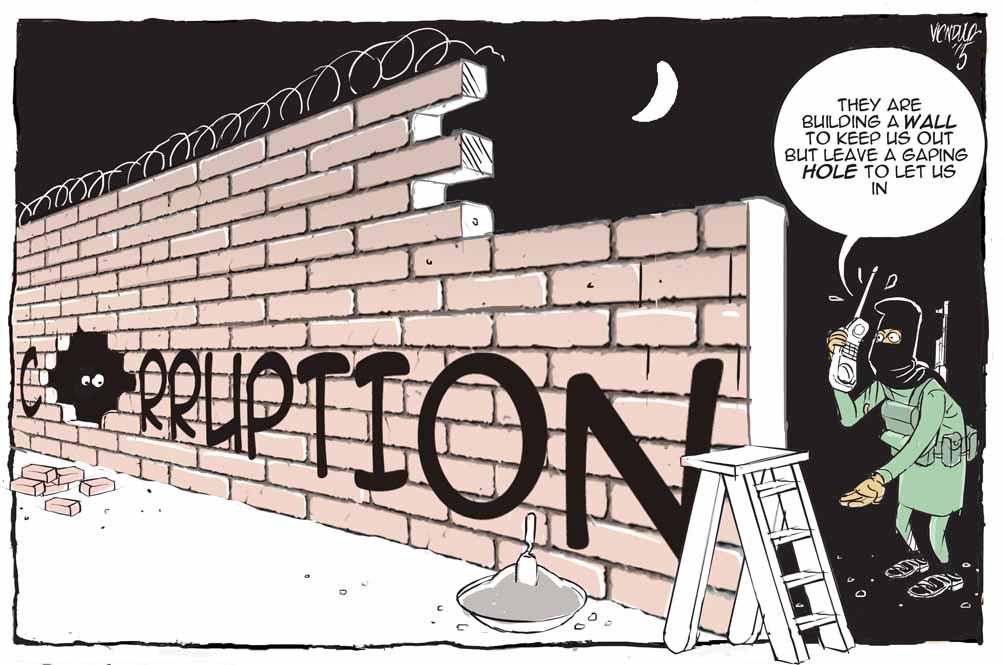
Kenya's "Anti-Terror" Border Wall


View image on Twitter 
 
Kenya this week began building a barrier along its entire border with Somalia, in a purported effort to prevent incursions by fighters from al-Shabab, an insurgency based mainly in Somalia which has carried out numerous attacks in Kenya, including the 2 April shooting of 147 students in the Kenyan town of Garissa.
This massive project has generated heated debate. IRIN has gathered a range of views.
Deputy President William Ruto said the fence would stretch 700 kilometres. ‘‘Whatever it is going to cost us and whatever it will take, we are going to make sure that our country is safe,” he added in a televised speech.
Interior Ministry Spokesman Mwenda Njoka told IRIN that the barrier would be built by the National Youth Service under the supervision of the army.
He also said:
“The wall is basically meant to limit illegal crossing and monitor movement of people. People with legal documents will be allowed to cross as security agents capture their data. We want to know specifics of people, why they are moving from country to country and what their intentions are.
“It will involve a combination of putting up obstacles and digging trenches, especially in areas which are not navigable, to prevent people from crossing into and from the country. There will be CCTV cameras powered by solar and a control centre manned by border patrol units, where information on possible threats will be received, tabulated and action taken in real time. Some areas will have electric fences.
“There will be designated points for people to legally use while entering or leaving the country. 
‘‘Government security agents believe al-Shabab combatants do not live in the country [Kenya], but rely on Kenyan recruits to do logistics for them.”

George Morara, Vice Chairman of the Kenya National Commission on Human Rights, said constructing the barrier was an “exercise in futility."
He added:
“It is a monumental waste of tax-payers' money. Where similar walls have been built or exist to keep out the so-called ‘undesirables’, they have not been successful. Case in point, Israel’s wall to keep out the Palestinians has not stopped the attacks against Israel. They have only led to more creative ways of circumventing the barrier, through for example, the building of underground tunnels by Palestinians as conduits of attack against Israelis. Also, the mighty American wall on the US-Mexico border has not stopped Mexicans who are determined to get to the US from scaling the seemingly impregnable wall.
“The building of the wall presupposes that al-Shabab is exclusively made up of ‘external enemies’ who are hell-bent on attacking Kenyans. The recent terror attack [in Garissa] only served to confirm what has always remained a known fact in the country: that the militant group is actively recruiting young and disenchanted Kenyans into its radical and extremist views.

“What we need to do as country is … create opportunities for gainful employment for the youth and… do all we can to eliminate corruption within our security agencies as this remains a big contributor to Kenya's vulnerability to terrorist attacks.”

Abdirashid Hashi, Executive Director of the Heritage Institute for Policy Studies, a Mogadishu-based think tank, said he understood Kenya’s “urge to do something, anything about the [al-Shabab] menace.”
He added:

“However, what Kenya needs is to pause and devise a long-term strategic plan to cope, deal and mitigate this clear and present danger - which is a decade old now and might take another decade to eradicate. Both Kenya's initial decision to send troops to Somalia and its current policies such as closing remittances or announcing mass deportation of legal refugees, or branding the loudest anti al-Shabab Islamic scholars , comes across as reactionary decisions made by panicky politicians.
“Kenya's best bet to overcome the serious threats posed by al Shabab lies with its ability to harness the ingenuity of its Somali and Muslim citizens and making them lead the battle against al Shabab and working closely with Somalia -- the source and the main theatre of the menace. Unfortunately Kenya now seems to have bypassed such a path and is engaged in sabre-rattling, refugee-chasing and lashing out at potential partners in its struggle to defeat al-Shabab.”


David Anderson, Professor of African History at the University of Warwick, described the barrier as "a crazy idea."
“Are we going to keep al-Shabab in [Kenya], or are we going to keep them out? The problem, at this stage is inside Kenya.
"The wall I assume, is more intended with dealing with refugees, but it’s a ridiculous idea.”

IRIN also spoke to a number of Somali refugees and ethnic Somali Kenyans:
Abdi Ahmed, Somali refugee from Baled Hawa
“I don’t think this wall will change the situation, it will only create division among neighbouring Somalis. Some of my family live in Baled Hawa [in Somalia] and their main trading partner was on the other side, in [the Kenyan town of] Mandera. They will suffer financially and end up refugees like me."
Dubad Mohamed, Somali refugee from from Kismaayo
“If the main reason why Kenya is building the wall alongside the border is security, then let it go on; we the refugees need peace, we suffered as Kenyans are suffering.”
Malyuun Koriyow, resident of Nairobi’s Eastleigh district
“I think the wall is a waste of money and resources. The government should invest in police and their equipment rather than a wall which will cost tax-payers huge sums of money.”
Mohamed Ahmed Farah, Eastleigh resident
“I think this wall Kenya wants to build is like that wall of Israel and Palestine: it is an apartheid wall. Kenya has the right to protect its citizens, but not [with] this wall. It is dividing ethnic Somalis.
“Al-Shabab is everywhere. Kenya should invest in intelligence and cooperating with the locals if it wants to defeat al-Shabab”


from here


Friday, September 05, 2014

Medical Racism and the African Patient

How medical folklore demonises Africans all over the world

Mandisi Majavu

The current Ebola crisis reinforces the prevailing narrative that black Africans living in Western countries are the diseased ‘other’ who pose a threat to the health of whites

In his book, ‘Infections and Inequalities’, Paul Farmer writes that we live in a world where infections pass easily across borders, while resources, including cumulative scientific knowledge are blocked at customs. The recent outbreak of Ebola in West Africa is a case in point. The World Health Organisation has warned that the number of Ebola cases could rise to 20,000 largely because the medical staff in these West African countries do not have the resources to deal with the rapid spread of the virus.

West Africa and Western medicine have a history that reaches back to the 19th century. By the early 19th century, the medical folklore, which went hand-in-hand with the European colonial project in Africa, considered the region “the white man’s grave”. The notion of the white man’s grave emerged due to the high death rate of Europeans in West Africa in the 19th century. Scholarly studies show that in quantitative terms the mortality rate during that period was usually between 300 and 700 per thousand per annum for any group of European newcomers to West Africa.

Modern science shows that Europeans died in large numbers in West Africa simply because they lacked immunity to yellow fever and malaria, an immunity that many Africans developed in childhood. However during the 19th century Europeans believed that Africans had something in their DNA, which equipped them to survive the climate in the region. The “Africanist discourse” shaped the thinking of the medical establishment of the time. According to the Africanist discourse, “Africa produces monsters”. Christopher Miller, an academic based at Yale University, explains that the Africanist discourse is a poor relation lexically and institutionally, to the prestigious and well-endowed study of the “Orient”.

In the 21st century, the discourse has changed slightly, so has medical folklore. Today’s medical folklore is characterized by its use of sophisticated codes to talk about diseases and disorders that are associated with black Africans. In his book, ‘The Origins and Consequences of Medical Racism’, John Hoberman argues that many diseases and disorders have been “effectively coded ‘white’ or ‘black’, depending on whether they are associated with modernity (white) or socially backward (black) ways of life.” The prevailing view is that black Africans living in Western countries are the diseased ‘other’ who pose a threat to the health of whites. Modern medical folklore essentially regards African immigrants living in Western countries as an infectious “reservoir of diseases” - to use Hoberman’s phrase. Another feature of this perspective is an overarching theme that often ties African diseases to sexuality. Hence, as American scholar Abby Ferber points out, “disease becomes a metaphor in this discourse, invoked again and again.”

Against this background, Australian politicians such as Pauline Hanson have in the past associated African refugees with the threat of diseases such as tuberculosis, hepatitis, AIDS and other contagious afflictions. According to Heather Worth, an associate professor at the University of New South Wales, the first settlement of African refugees in New Zealand in 1993 led the public, politicians and government officials to call for mandatory HIV testing. In Israel, blood donated by Africans was, until 2007, discarded by Israeli hospitals because of the belief that Africans are diseased.

The foregoing partly explains the large research output, which focuses on African immigrants and infectious diseases in Western countries. According to Farmer, The history between Western medicine and West Africa teaches that “diseases that predominantly afflict the poor are unlikely to garner funding for research and drug development, unless they begin to ‘emerge’ into the consciousness and space of the non-poor.”

While Ebola explosions largely afflict African people living in poverty and health care workers who serve the poor, the recent Ebola outbreak has put Western Europe on alert. The Guardian reports, “from Austria to Ireland, Spain to Germany, there have been at least a dozen cases of West Africans with mild flu symptoms being isolated until it was established that they were not suffering from Ebola.”

The consensus among scientists is that the Ebola virus does not pose any risk to the general public in Western countries with well-resourced public health care systems. However, African refugees living in foreign countries are often impacted by disease outbreaks such as the recent Ebola eruption in more ways than one. Disease outbreaks pose a threat to the health of refugees directly, but also have a significant impact on the resettlement chances of African refugees to Western countries or any other country for that matter. In fact, research shows that outbreaks of diseases such as measles, rubella and hepatitis A have disrupted the resettlement of African refugees several times since 2004.

What comes to mind is an observation once made by microbiologists, husband and wife team, René and Jean Dubos that ‘‘tuberculosis was, in effect, the first penalty that capitalistic society had to pay for the ruthless exploitation of labour.’’ Medical literature is replete with evidence that the world’s burden of disease disproportionably affects black Africans, just as the husband and wife Dubos team argue, many Africans also know that the poor health situation in Africa exists largely due to colonialism, imperialism and global inequality.


from here


Sunday, March 09, 2014

Post-Colonial Africa - The Legacy

Southern Sudanese swapped the battlefield for the ballot box two-and-a-half years ago, when they voted overwhelmingly to sever their ties with Sudan. On July 9th 2011, jubilant street parties in the capital city of Juba marked the creation of the world’s newest sovereign state. But beyond South Sudan’s freshly drawn borders, some members of the international community were worried. The secession, they said, could spur on the dozens of other separatist movements in Africa. They feared that it set a precedent that would threaten the integrity of territorial borders across the continent.

Post-colonial Africa has a long history of separatist movements: a predicament that dates back to 19th-century Europe. When colonial leaders met in Berlin in 1884 to parcel out the “dark continent” among themselves, they did so with scant consideration for divisions of language, religion or ethnicity that already existed here.
Then when independence came to most African countries in the 1960s, the continent’s new leaders agreed to stick to these borders. Maintaining the status quo would have been in their interest for many reasons but mostly because it provided a way to prevent potentially damaging conflicts from erupting among themselves.
Since then, Africa’s borders have remained largely unchanged. Aside from Namibia and South Sudan, the only other country in Africa that has won legal autonomy since colonial independence is Eritrea, which after a long and bloody war seceded from Ethiopia in 1993.

During the same period, in other parts of the world, many apparently immutable boundaries have been challenged and changed. Since 1990 especially, more than 30 new countries have been created around the world, as the dissolution of the Soviet Union and the Balkan conflict led to the formation of new states that reflect ethnic, linguistic and nationalist divisions. Yet the map of Africa remains one drawn up by foreigners, ignorant of extant ethnic and religious realities.
As democracy becomes more widespread in Africa and a new mood of self-determination swells, the insistence on sticking to colonial borders is facing growing popular challenge. Across the continent, dozens of governments are struggling against rebel groups demanding either greater autonomy or full independence.

“The old understanding of ‘Do not change the colonial boundaries’ is over, in terms of people trying to find ways to govern their countries,” says Annette Weber, head of Middle East and Africa research at the German Institute for International and Security Affairs (SWP). “And some of the countries, in their current boundaries, just don’t make sense.” She points as one example to Nigeria, a nation that is divided between religiously distinct Muslim and Christian populations along a clear north-south fault line.
Continued dissatisfaction with government leadership exacerbates the problem, she says. “What we have seen in Africa is a lot of centralised states where the leader is running the capital but not really reaching out to the periphery. The state is so distant that it doesn’t feature in the life of those populations.” These marginalised people, she explains, often feel that they would be better off with “one identity-based territory that binds them. Independence becomes a hope or an expectation for them.”

The Guardian newspaper in 2012 drew up a map of separatist factions in Africa showing their various aims and claims. The map was strewn with movements, which span the continent from the Casamance region in southern Senegal to the Uamsho Islamists (the Association for Islamic Mobilisation and Propagation) fighting for independence on the already semi-autonomous Tanzanian island of Zanzibar.
The deteriorating political situation in Zanzibar is of growing concern to the Tanzanian government for several reasons. Since 2012, the tactics employed by Uamsho have become increasingly violent, causing fatal clashes with local police and simultaneously jeopardising Tanzania’s reputation for political stability. This is portentous economically since the Indian Ocean island relies heavily on revenue from tourists, who flock to its pristine beaches.
Kenya’s coastal region, similarly reliant on tourists for revenue streams, has also been the target of attacks allegedly committed by a separatist group—the Mombasa Republican Council, which demands independence from the country’s mainland.

The case of the Bakassi peninsula in the Atlantic Gulf of Guinea illustrates the power colonial boundaries still hold. Nigeria had been administering the tiny oil-rich province since independence in 1960. In 2002, the UN’s International Court of Justice ruled that, according to the ageing European colonial maps supplied by both nations in their bid for ownership of the territory, Bakassi should belong to Cameroon. Four years later Nigeria formally handed over the disputed peninsula to neighbouring Cameroon.
The government in Nigeria’s capital, Abuja, said that by following the ruling it was respecting international law, but many people in the Bakassi region were outraged, making it clear that they considered Nigeria their home. Last year, a decade after the ruling, a declaration of independence (made from a radio-station tower on a tiny island off the peninsula’s coast) by the Bakassi Movement for Self-Determination, drew brutal reprisals from the Cameroonian military.

These conflicts are by no means restricted to sub-Saharan states. Algeria, for example, faces similar issues. Berber tribes in the northern region of Kabylie have long agitated for greater autonomy from the mainland. This is an underdeveloped territory, where water and power supplies are dire, dissatisfaction is high, and insecurity rife. In January 2013, two security guards were killed in an al-Qaeda-linked attack on a gas pipeline 120km southwest of Algiers.
Many of the ethnic Kabylie have boycotted Algerian politics in recent years and advocate for greater autonomy under a system that would recognise their identity and allow them greater control over oil and gas revenues, while remaining part of Algeria.

The list of these conflicts goes on and on: from Sudan to Western Sahara, from the Democratic Republic of Congo to Mali. Unsurprisingly, this is not a situation that African governments are taking lightly. In Zambia, for example, more than 70 separatists demanding independence for Barotseland state in the impoverished Western Province were recently arrested and are currently on trial for treason.
When Zambia’s vice-president, Guy Scott, spoke to Africa in Fact about the arrests and trial, he echoed the sentiments of officials across the continent. “When the Tamil Tigers first started in Sri Lanka, we all thought they were just a bunch of second-rate intellectuals, and look how much damage resulted,” he says, referring to the independence movement that took Sri Lanka into a civil war in the early 1980s. “I think it is dangerous to underestimate these things. We’ve been taking it quite seriously.”
While the dissatisfaction stems from lack of economic opportunity among populations seeking greater control over their natural resources, the government’s patience is limited.
“You can have sympathy, but I don’t think it’s helpful at this point,” he says. “They set up the Barotseland Liberation Army, for example, and that’s not helpful, even if it is only five guys with a penknife between them. There is certainly no majority of people who want to separate from Zambia. The rebels are young men mostly and what they want is a job and money and education and food.”
In a bid to quell the movement, Zambia’s ruling Patriotic Front party announced a revenue-sharing plan in 2012 that will use copper incomes to try to foster development and reduce poverty in the region. But, where necessary, the police will continue to make arrests. “I think the crackdown continues,” Mr Scott says, “and it will until there are no issues to be attended to.”

Whether any of these movements, even if successful, is likely win legal independence is another question altogether. The experience of Somaliland, a tiny breakaway state in the Horn of Africa, shows that neither local governments nor the AU are keen to see the continent further divided. “The AU is overwhelmed by fear that all the other small separatist entities might try to become independent,” argues Ms Weber. “They are worried [that recognising Somaliland] could set off a wave where we would not see an end or a viable solution, so they are quite cautious in taking the next step after South Sudan. I don’t see the reality of the separation going through in the near future,” she says.

This is a warning that could apply to any other independence movement across the continent.
And even if Somaliland wins legal recognition, the experiences of Eritrea and South Sudan are proof enough that secession does not necessarily equal political or economic success.
Since its independence, Eritrea has disputed its borders, fought another war with Ethiopia and clashed with troops from Djibouti. Its tiny economy is growing at a fair pace. But the UN and NGOs accuse the single-party state of brutal repression, including extra-judicial killings and political detentions.

In its two-and-a-half years of independence, South Sudan has bickered with Sudan over its rights to oil-export infrastructure, crippled its economy by closing crude production, and warred over disputed borders in the oil-rich Abyei region. Neither looks much like a developmental success story.
The experience of these governments, born of failed leadership in mother states, provides a valuable lesson. “What is often overlooked is where these states come from,” Ms Weber explains. “Where did South Sudan’s new government learn the business of statehood? They learned it from Khartoum. And many systemic problems of neglect and exclusion that we see from the government of Khartoum are now replicated in South Sudan.

“Often separation results in a duplication of another failed elite, without [an] understanding of what it is to be a government and to be responsible and to represent the interests of the population. That’s not a viable option,” she adds.
In Ethiopia, the Oromo Liberation Front (OLF), an independence movement established in 1973, appears to have come to terms with those constraints. In 2012, it surprised observers by dropping its long-held demands for secession, with spokesmen saying they would now work within the political system “to struggle for freedom in consort with all democratic forces”.

Thus fears of a domino effect emanating from South Sudan’s messy transition were probably overblown. But the persistence of independence groups reflects a bigger and more concerning trend: the failure of leaders to deliver change. “I think there will be more separatist groups calling for separation because they believe it could solve their problem of neglect, but not necessarily because South Sudan set a precedent,” Ms Weber argues.

If governments on the continent fail to address the root causes of discontent—by providing more and better services, and helping to pull people out of poverty—they can expect separatist movements to stir up unrest for years to come.

 From here

 Separation anxiety


Monday, October 14, 2013

No Person Is Illegal - Break Down Borders And End Capitalism


Club Dead: EU immigration laws turning Mediterranean into Graveyard- Malta PM

Posted on 10/13/2013 by Juan Cole here

Malta’s prime minister Joseph Muscat said Saturday that the European Union’s inaction on immigration reform is turning the Mediterranean into a graveyard.
UPI quotes him as saying:
“I don’t know how many more people need to die at sea before something gets done … rules need to change, whether they are tighter or looser is not the issue, the fact is that this thing is broken and it needs to be fixed… As things stand we are building a cemetery within our Mediterranean Sea.”
On October 11, a ship carrying migrants capsized off Malta, spilling 200 persons into the water. Some 33 drowned but the Italian coastguard rescued the others.


The week before, 319 migrants died when their vessel capsized near Italy.
In the past 15 years, some 14,000 migrants have died in the Mediterranean trying to reach Europe. That is nearly 1000 a year
The UN High Commissioner for Refugees says that 32,000 migrants have reached southern Italy and Malta so far in 2013, and about two thirds of them have applied for asylum.
Many are from Eritrea, Somalia and Ethiopia, though Syrians have joined the risky trek in some numbers recently.
CSM quotes sources saying Europe needs to attack human trafficking networks to stop the carnage.

 A solution requires a thorough understanding of the cause of the problem. The EU is more interested in diverting attention away from the situation in the Mediterranean Sea than from preventing any more deaths. Tougher laws on asylum seekers? Track down and prosecute the traffickers who benefit monetarily? Open more 'off-shore' detention centres?
These are not solutions. While ever goods and services, outsourcing and capital can flow freely across borders around the world but people remain restricted by the self-same borders this migration of 'illegals' will continue by land, sea and air whatever the cost to the vulnerable.

One world. One people. No borders. No capitalism. 
There IS an alternative - and that is socialism.
JS